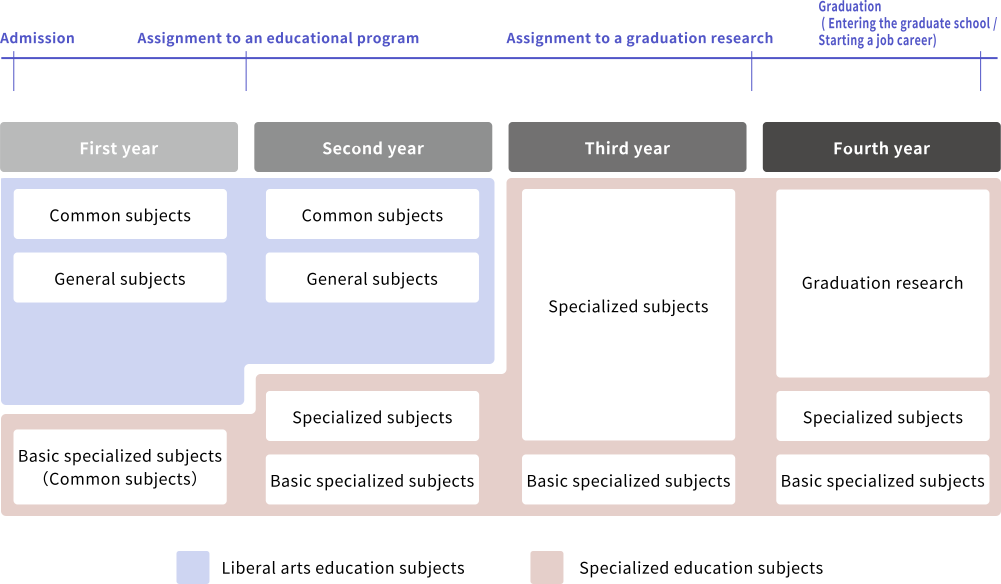
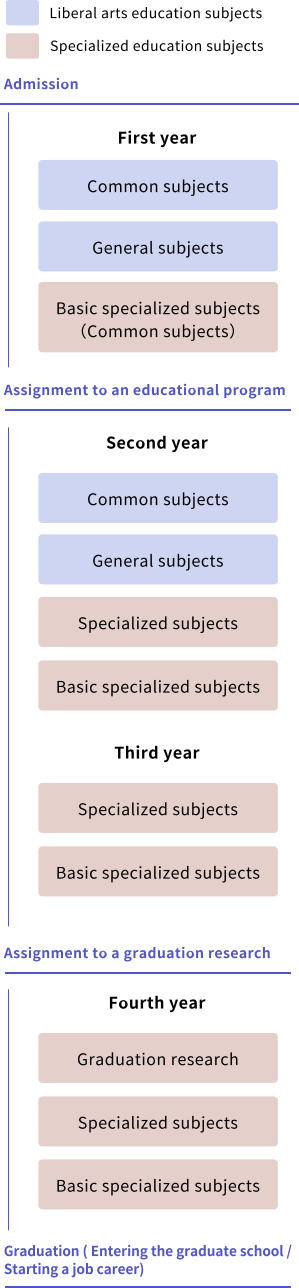
In Cluster 2, the School of Engineering, all students will study mainly in liberal arts education courses in the first year. From the second year, students will be assigned to either the “Program of Electrical, Systems and Information Engineering” or the ” Semiconductor System Program.” By providing a curriculum that allows students to systematically study each specialized course from basic to advanced, we nurture students with solid basic skills and deep expertise. Basic and specialized courses overlap among programs, and are designed to provide students with the specialized knowledge and applied skills necessary in their respective fields.

Four-year Learning Process

Four-year Learning ProcessFour-year Learning Process

2 Educational Programs

Semiconductor System Program

Students can systematically learn the fundamentals of physical and electrical systems, including electromagnetism, quantum mechanics, semiconductor device engineering, and electronic circuit theory, as well as manufacturing and design techniques for integrated systems, including experiments and practical training, which are necessary for engineers who develop semiconductor electronic devices, optical elements, and integrated systems.

Jobs that allow you to use your expertise
Semiconductors, Devices, Electricity, Electronics, Automobiles, Communications, Software, Electric power, etc.

Program of Electrical, Systems and Information Engineering

In addition to basic theories in the fields of electric circuits and energy, information engineering, artificial intelligence (AI), measurement and control, and system planning and management, which are necessary for engineers who control, design, and manage systems related to electrical technology, students can learn about applications such as power systems, computers, robots, biological information systems, and social information systems, and acquire the skills necessary for analyzing and designing industrial and social systems.

Jobs that allow you to use your expertise
Electrical, Electronics, Electric power, Machinery, Automobiles, Software, Solutions, etc.

Specialized subjects

The red circle “” indicates the main specialized subject to be learned.

Subdivisions of Specialized Subjects Program Program of Electrical, Systems and Information Engineering Semiconductor System Program Main Subject
Basic specialized subjects Applied mathematics (calculus, series, vectors and matrices), Electronic systems (principles and structure of transistors, principles of computers), Electric circuit theory, Programming, Engineering experiments
Specialized subjects Materials science Electromagnetism, Quantum mechanics, Nanotechnology
Specialized subjects Integrated systems Semiconductor device engineering, Logic system design, Basics of integrated circuits and design methods
Specialized subjects Electric circuits and energy Circuit theory, Electronic circuits, Power systems engineering, Energy generation and conversion
Specialized subjects Measurement and control Signal processing engineering, Robotics, Communication engineering
Specialized subjects Systems planning and management Mathematical programming, Simulation Engineering, Decision making theory, Production management theory
Specialized subjects Computer science Digital circuit design, Computer configuration theory, Operating system, Computer network
Specialized subjects Informatics and mathematics Algorithms and data structures, Programming languages, Intelligent systems

The red circle “” indicates the main specialized subject to be learned.

Laboratories

  • Semiconductor System Program

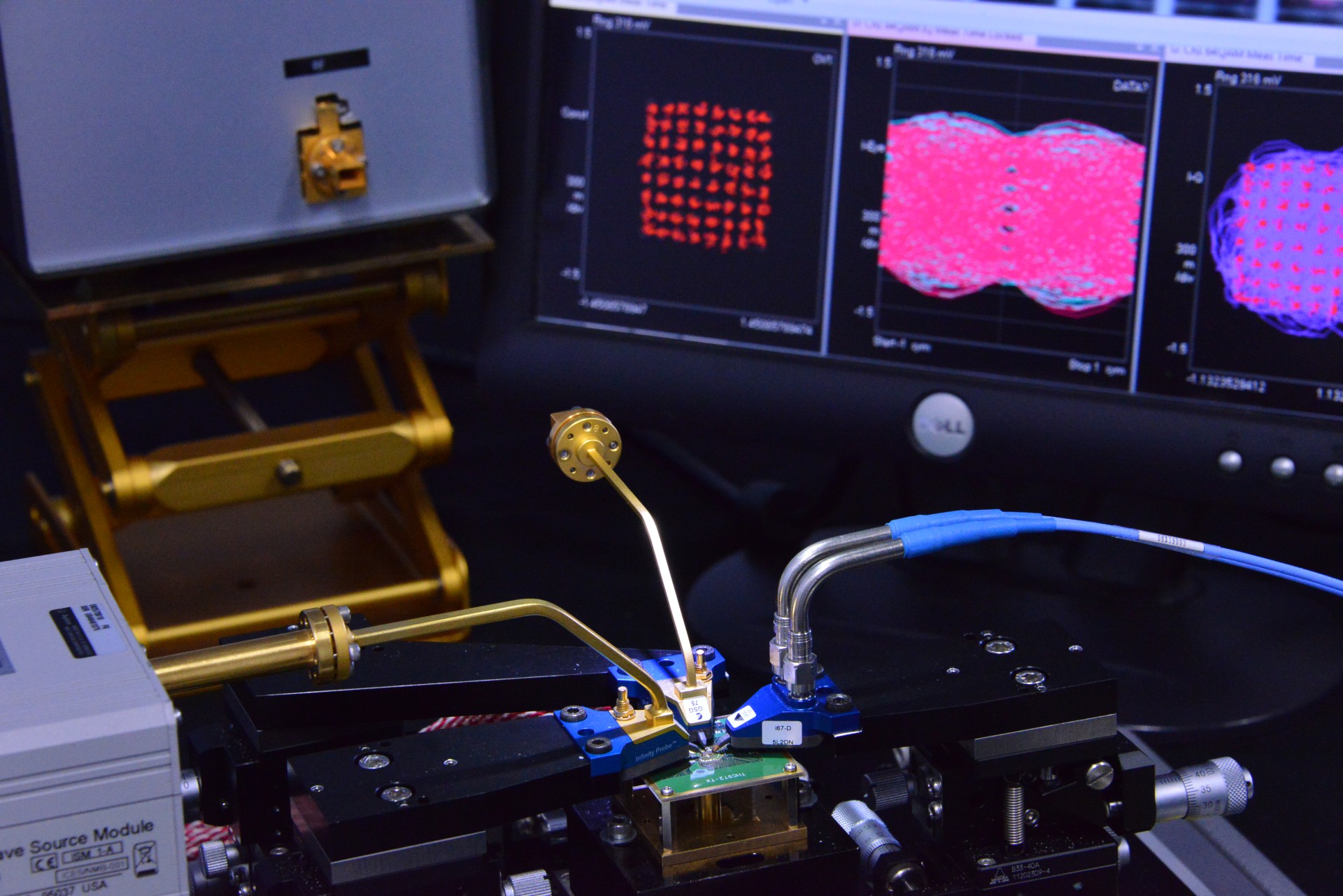
Integrated Systems Laboratory
Integrated Systems Laboratory

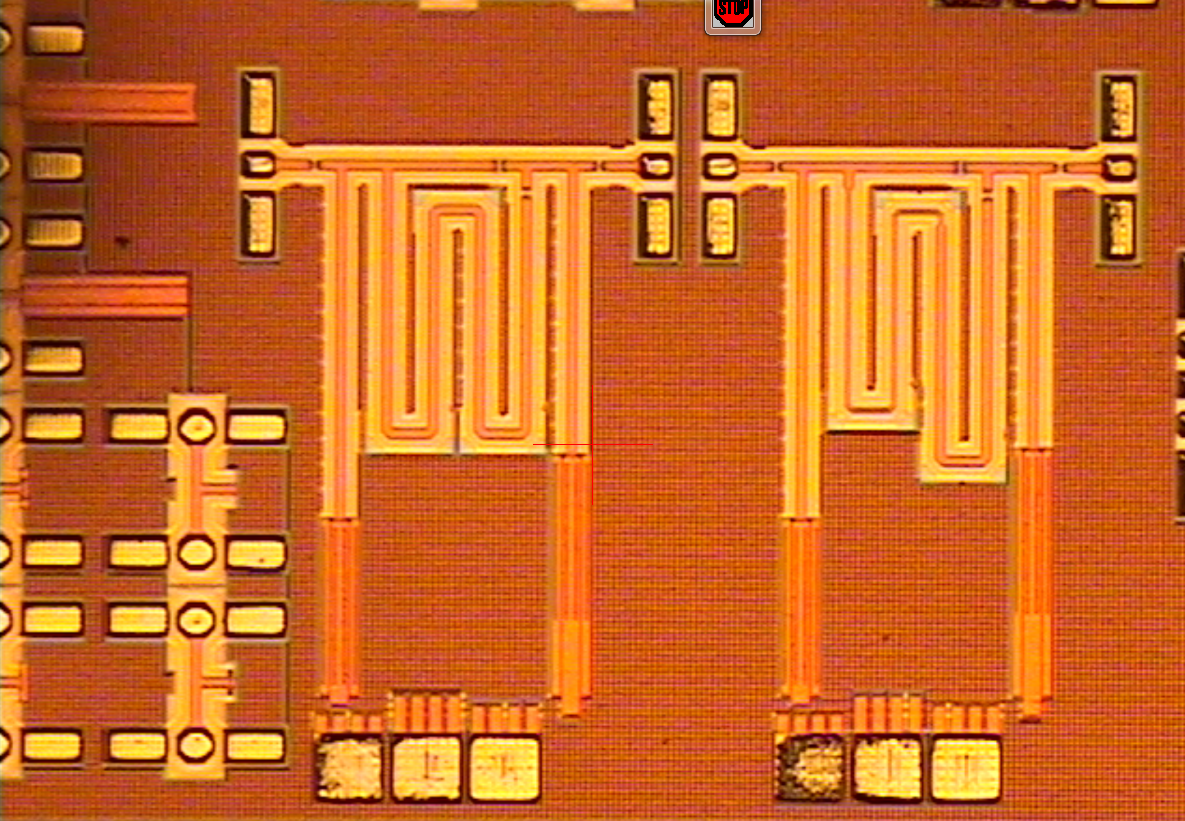
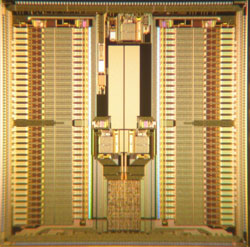
We are studying devices using ultrahigh-frequency integrated circuits up to the terahertz band, which has properties between radio waves and light, as well as sensors and communication systems that use these circuits. By creating ultrahigh-frequency devices with silicon CMOS integrated circuits suitable for mass production, we make it easy for anyone to use devices with innovative performance. The sixth generation (6G), which will follow the fifth-generation communications (so-called 5G) that began in 2020, is expected to include wireless communications in the 300 GHz band using the terahertz band. In 2019, we have realized the world's first single-chip CMOS transceiver capable of 80 gigabits per second wireless communication using the 300 GHz band.
The realization of an innovative device is the result of a steady process of improving the elemental circuits that make it up. The technology used in the past is not always truly the best method. We realize innovative performance by going back to basic theory and the laws of physics, considering why we do what we do, creating devices, and evaluating them.

  • Minoru Fujishima

    ProfessorMinoru Fujishima

  • Takeshi Kuboki

    Associate ProfessorTakeshi Kuboki

Integrated Devices Laboratory

Integrated Devices Laboratory

We work on radio-frequency (RF) integrated circuit design, measurement, and device modeling. Computer-aided design (CAD) of analog and RF circuits has not been as successful as for digital circuits. We are interested in gaining design insights that will benefit practicing circuit designers and development of RF CAD. We also look at characterization and modeling of devices up to millimeter-wave frequencies. We are also involved in the development of device noise measurement solutions covering high frequencies and low temperatures.

  • Shuhei Amakawa

    ProfessorShuhei Amakawa

  • Shinichi Nishizawa

    Associate ProfessorShinichi Nishizawa

Research Institute for Semiconductor Engineering

Research Institute for Semiconductor Engineering

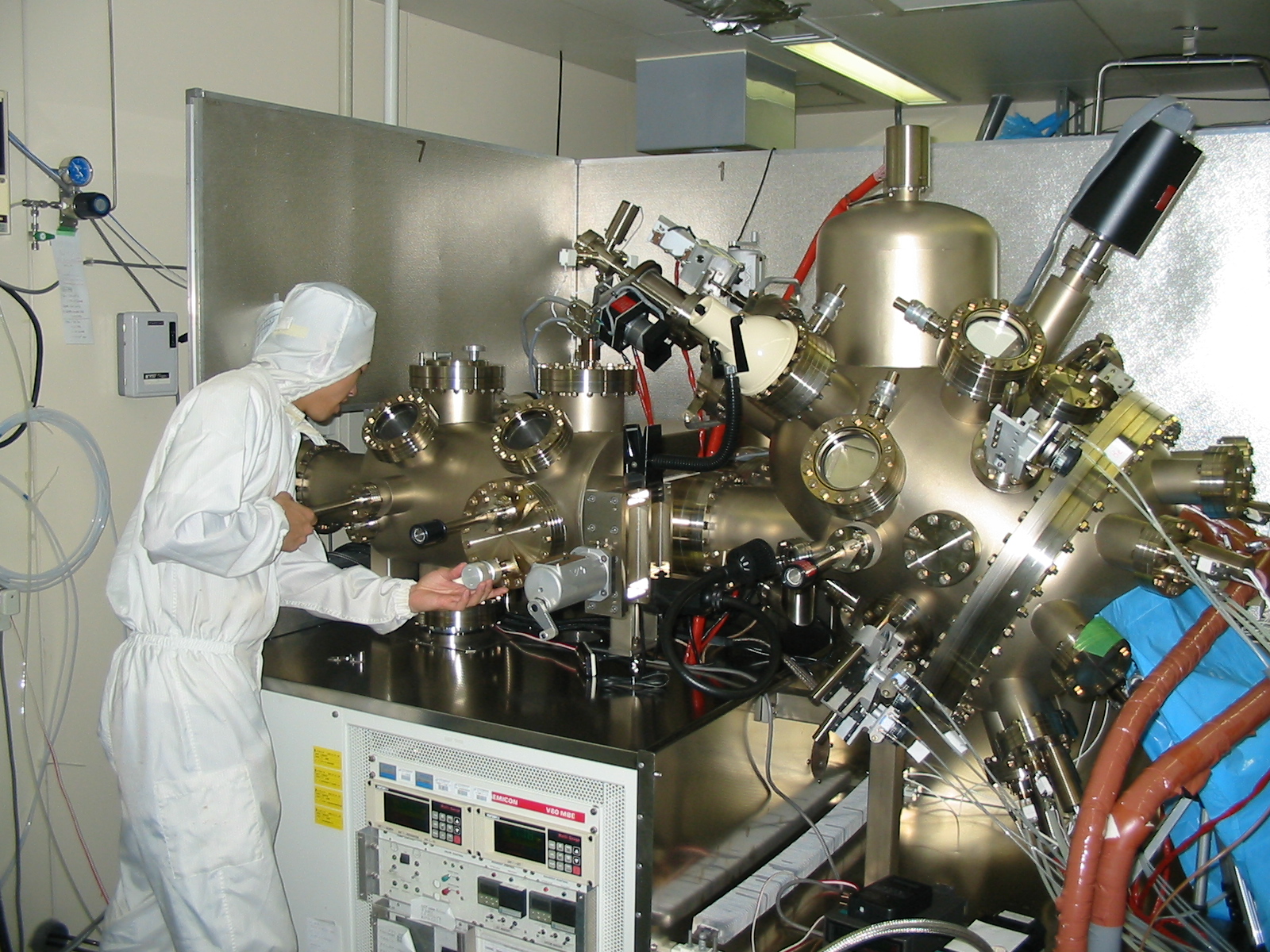
The Research Institute for Semiconductor Engineering was founded, aiming to develop the fundamental technologies necessary to achieve global excellence in electronic and bio integrated sciences for preventive medicine and ubiquitous diagnoses on early stages of illnesses in the future advanced medical-care society beyond the present information society. The institute is equipped with two super clean rooms (R&D CMOS fabs), and here researchers could fabricate their own integrated devices. The research field includes Nano-Integration, Integrated Systems, Molecular Bioinformation and Nanomedicine. The Research Institute for Nanodevices is selected as one of 1. MEXT’s Research Center for Bio Medical Engineering, 2. MEXT’s Advanced Research Infrastructure for Materials and Nanotechnology (ARIM), 3. METI’s J-Innovation HUB.

  • Masakazu Iwasaka

    ProfessorMasakazu Iwasaka

  • Suguru Kameda

    ProfessorSuguru Kameda

  • Shin-Ichiro Kuroki

    ProfessorShin-Ichiro Kuroki

  • Akinobu Teramoto

    ProfessorAkinobu Teramoto

  • Hideki Gotoh

    ProfessorHideki Gotoh

  • Tetsushi Koide

    Associate ProfessorTetsushi Koide

  • Anri Nakajima

    Associate ProfessorAnri Nakajima

  • Masataka Miyake

    Associate ProfessorMasataka Miyake

  • Ryo Yokogawa

    Assistant ProfessorRyo Yokogawa

Material Science Nanotechnology Laboratory

Material Science Nanotechnology Laboratory

Currently, transistors in electronic devices used in computers and smartphones are getting smaller, reaching the level of several tens of nanometers. A nanometer is one millionth of a millimeter (10-9m).
Our group is conducting research on nanotechnology. Nanotechnology is a technology that fabricates and processes nanometer-sized materials and utilizes their specific physical properties. In particular, we are studying nanotechnology and nanoscience for future electronic devices with the keywords of "surface science", "self-assembly", and "nanomaterials". Through the research work, the students can obtain ability to work on technological development in various fields including electronic devices development.

  • Hitoshi Suzuki

    Associate ProfessorHitoshi Suzuki

  • Hiroyuki Sakaue

    Assistant ProfessorHiroyuki Sakaue

Quantum Optics Laboratory

Quantum Optics Laboratory

(Prof. Kadoya)
[1] Development of high performance THz wave emitter and detector
[2] Research on light wave manipulation by meta-surface

Quantum optics and quantum information (Prof. Hofmann)
At the photon level, light exhibits quantum properties that exceed the classical limit. Such non-classical properties of light can be used to realize a variety of advanced quantum information technologies. Theoretical knowledge is indispensable to understand the possibilities of quantum information. In our ongoing research, we use the mathematics of the Hilbert space formalism to analyze measurement statistics and to identify the limits of control for the quantum states of light and matter in order to clarify the operating principles of recent quantum technologies.
[3] Non-local quantum correlations in entangled states
Correlations between two quantum systems can be so strong that they cannot be explained by any combination of local values for these properties. A quantum state with such a correlation is called an entangled state. The theoretical investiation of the non-classical features of entanglement are the topic of this research.
[4] Research on quantum measurement
Due to the uncertainty principle, quantum states cannot be explained by the statistics observed in only one type of measurement. We investigate the trade-off between measurement uncertainties and the dynamics of measurement interactions in order to understand and control the non-classical features of quantum statistics and quantum information.
[5] Multi-photon interferometry
Because of their quantum correlations, multi-photon states can be used to achieve very high phase sensitivities in optical interferometers. In our research we analyze the statistics of multi photon interference using the Hilbert space algebra of multi photon states to identify the
fundamental principles that make extreme sensitivity possible.

(Prof. Tominaga)
My research theme is the development of novel optical and terahertz devices based on the crystal growth of dilute bismide III-V compound semiconductors. I also explore the novel crystal growth technique for compound semiconductors using marine photosynthetic bacteria.

  • Yutaka Kadoya

    ProfessorYutaka Kadoya

  • Holger F. Hofmann

    ProfessorHolger F. Hofmann

  • Yoriko Tominaga

    Associate ProfessorYoriko Tominaga

Mesoscopic Physics Theory Laboratory

Mesoscopic Physics Theory Laboratory

In nanometer-scale systems made of semiconductors and/or metals, an electron exhibits unusual behaviors that reflect its wave-particle duality. A nano-sized structure also strongly affects light. For example, light in a periodic nanostructure shows a band structure similar to that of electrons in a crystal. We are conducting theoretical research on the quantum properties of electrons and light in such small systems. We explore and realize functional devices based on new operating principles by using quantum effects, such as tunneling and superconductivity, and topological band structures of waves in periodic structures.

  • Yositake Takane

    ProfessorYositake Takane

  • Munehiro Nishida

    Associate ProfessorMunehiro Nishida

Semiconductor Electronics Laboratory

Semiconductor Electronics Laboratory

Our laboratory performs research on “Semiconductor” that will support a future society. We aim to generate new value by developing unique technologies through electronic engineering.
Research that we are involved in includes innovative plasma technologies for electronic device fabrication using atmospheric-pressure thermal plasma jets.
We have also developed a technology to transfer thin single-crystal silicon layers using the meniscus force of water to a PET substrate that is used in PET bottles. We have succeeded in using this technology to create flexible electronic circuits that serve as flexible MOS transistors and CMOS inverters that possess the highest performance in the world.
We look forward to working with everyone to create a better future.

  • Seiichiro HIGASHI

    ProfessorSeiichiro HIGASHI

  • Hiroaki Hanafusa

    Associate ProfessorHiroaki Hanafusa

Integrated Circuits Laboratory

Integrated Circuits Laboratory

We are engaged in research on low-power and low-noise circuit design technologies for analog-digital mixed-signal system LSIs. In addition, we are developing architectures for bio-sensing LSIs that detect biological signals such as neural activity. To support these systems, we also work on integrated circuit technologies that make their implementation possible. These technologies are expected to contribute to future applications in medical care, healthcare, and wearable devices.

  • Takeshi Yoshida

    ProfessorTakeshi Yoshida

  • Program of Electrical, Systems and Information Engineering

Control System Theory Laboratory

Control System Theory Laboratory

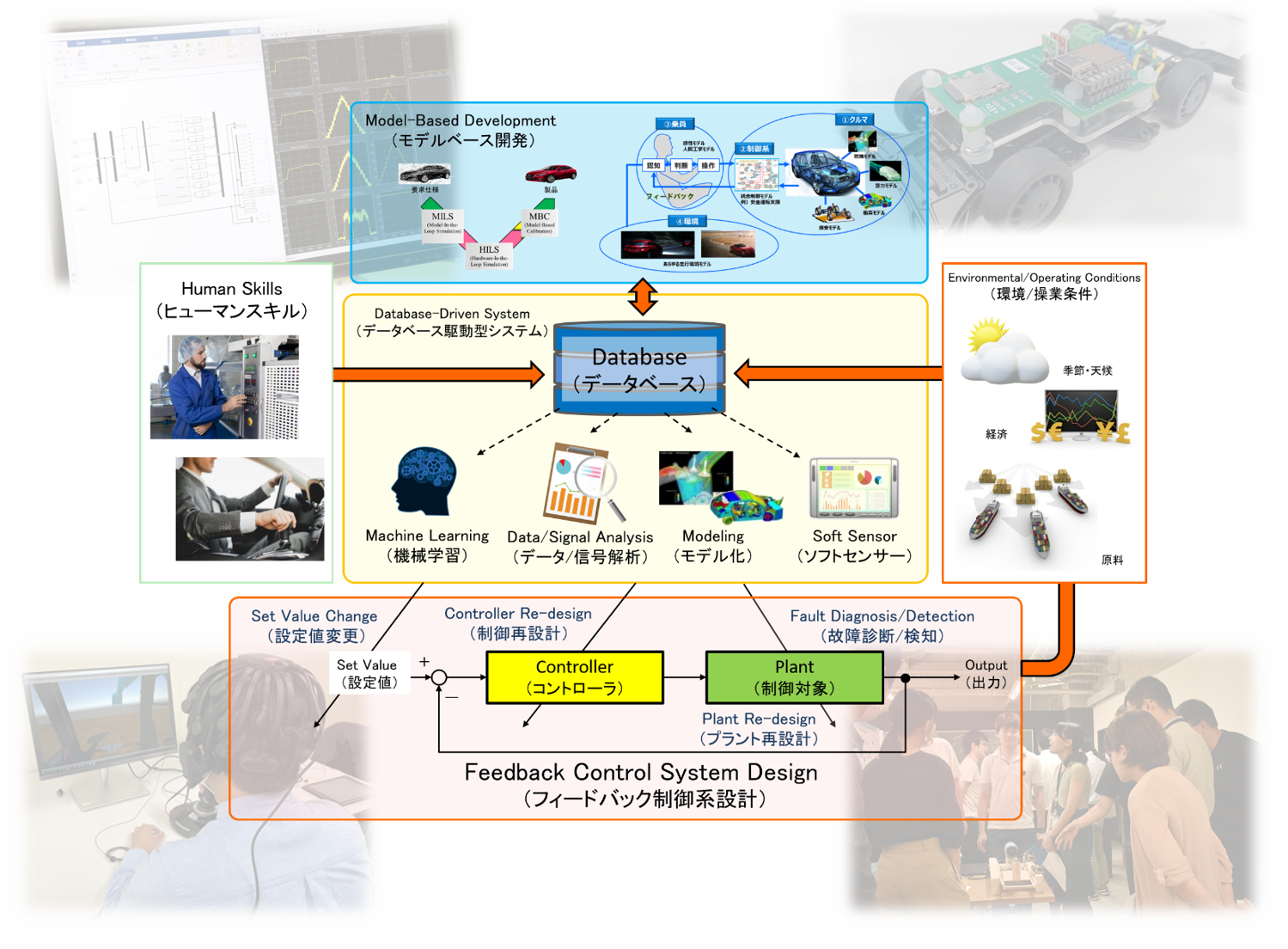
“Control" is working in our immediate surroundings and has become one of the essential technologies in our daily lives. By the way, it is not enough if "things" move by "control," but cost reduction and energy saving can be realized by moving "things" efficiently. As a result, the role of control technology is larger than we can imagine, as it can lead to increased profits and the realization of a society that achieves the SDGs, which have recently been the focus of attention. Meanwhile, AI, IoT, cyber-physical systems (CPS), and digital transformation (DX) are attracting attention, and research and development is being conducted to realize a data-driven society.
In the Control Systems Engineering (CSE) Laboratory, education and research on the construction of "data-driven smart systems" are being promoted, focusing on control technologies that support a data-driven society.

  • Toru Yamamoto

    ProfessorToru Yamamoto

  • Shin Wakitani

    Associate ProfessorShin Wakitani

  • Takuya Kinoshita

    Associate ProfessorTakuya Kinoshita

  • Masayoshi Nakamoto

    Assistant ProfessorMasayoshi Nakamoto

Social Informatic Laboratory

Social Informatic Laboratory

In the real world with conflicting or cooperating agents, complex events occur due to interactions caused by their actions. Rational decision making can be achieved by appropriately handling the uncertainty.
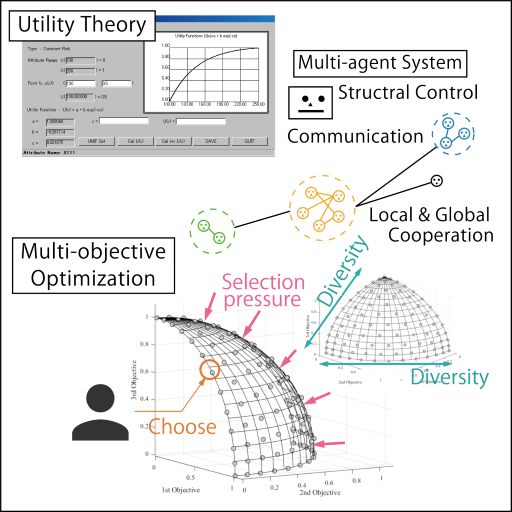
The social informatics laboratory conducts various research, including decision analysis and data analysis considering conflicting or cooperative relationships, uncertainty, preferences, behavioral psychology, mathematical analysis based on game theory, multi-attribute utility analysis, simulation analysis, and large-scale data analysis using machine learning. As a practical application, we target optimization of planning, operation, and control in electric power systems. We train students to become engineers to be a helpful discipline to our society.

  • Tomohiro Hayashida

    ProfessorTomohiro Hayashida

  • Shinya Sekizaki

    Associate ProfessorShinya Sekizaki

  • Katsumi Morikawa

    Associate ProfessorKatsumi Morikawa

Sensing Informatics Laboratory

Sensing Informatics Laboratory

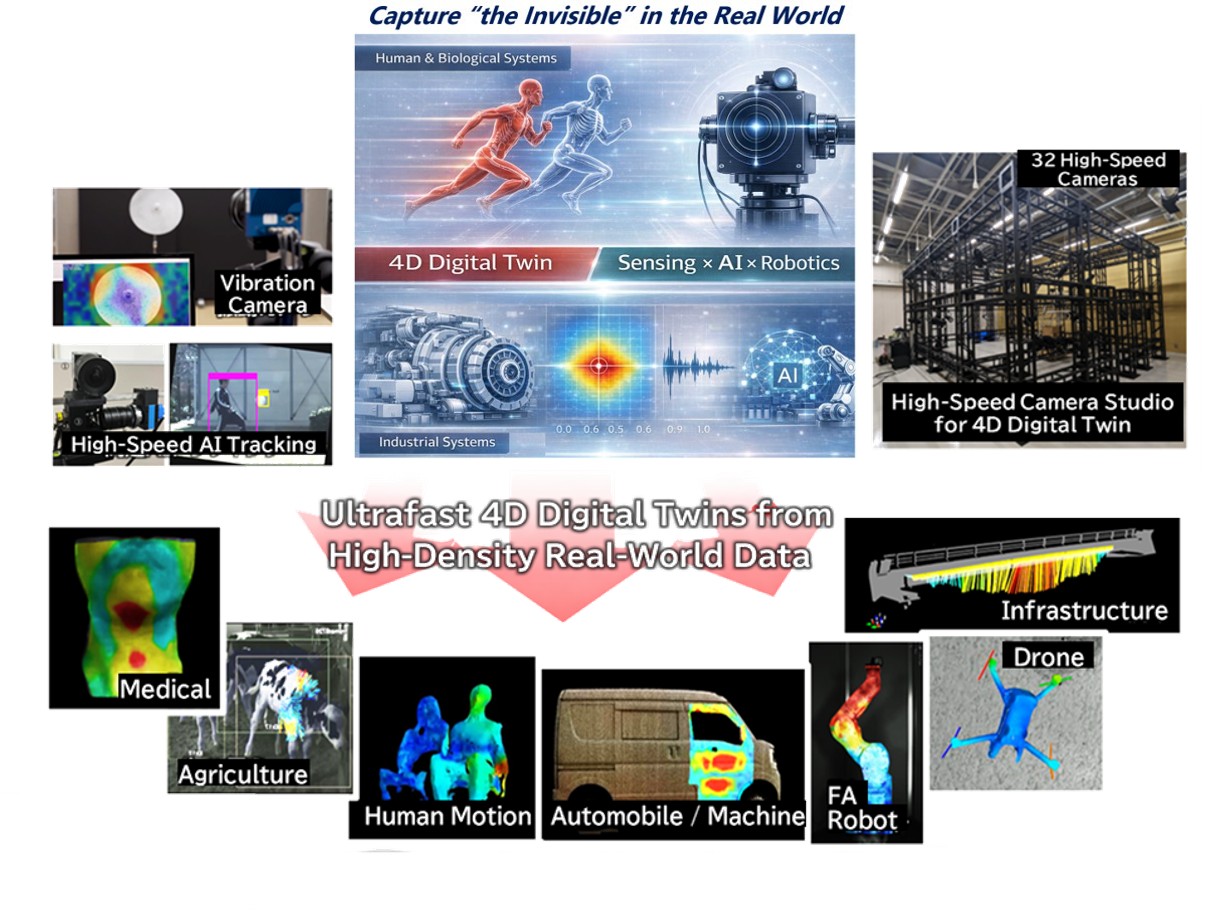
Capturing, understanding, and utilizing real-world phenomena as data has become essential across many areas of society. High-value data serves as a fundamental basis for creating new value and enabling practical implementation. Subtle, hard-to-observe signals-such as instantaneous motion, minute vibrations, and slight physiological changes-contain critical information for interpreting the states of human, biological, and industrial systems.

At the Sensing Informatics Laboratory, we develop information sensing technologies based on high-speed vision to capture the “invisible” in the real world and visualize dynamic phenomena. The acquired spatiotemporal data are integrated with AI and physical models and reconstructed as 4D (3D + time) digital twins, generating information that supports understanding and decision-making. We advance core technologies including computer vision, vibration sensing, AI-based tracking of moving objects, and robotic sensing, and promote their application to both human/biological systems and industrial systems through interdisciplinary and industry collaboration, aiming to address real-world challenges.

  • Idaku Ishii

    ProfessorIdaku Ishii

  • Kohei Shimasaki

    Associate ProfessorKohei Shimasaki

  • Feiyue Wang

    Assistant ProfessorFeiyue Wang

Mechatronics Laboratory

Mechatronics Laboratory

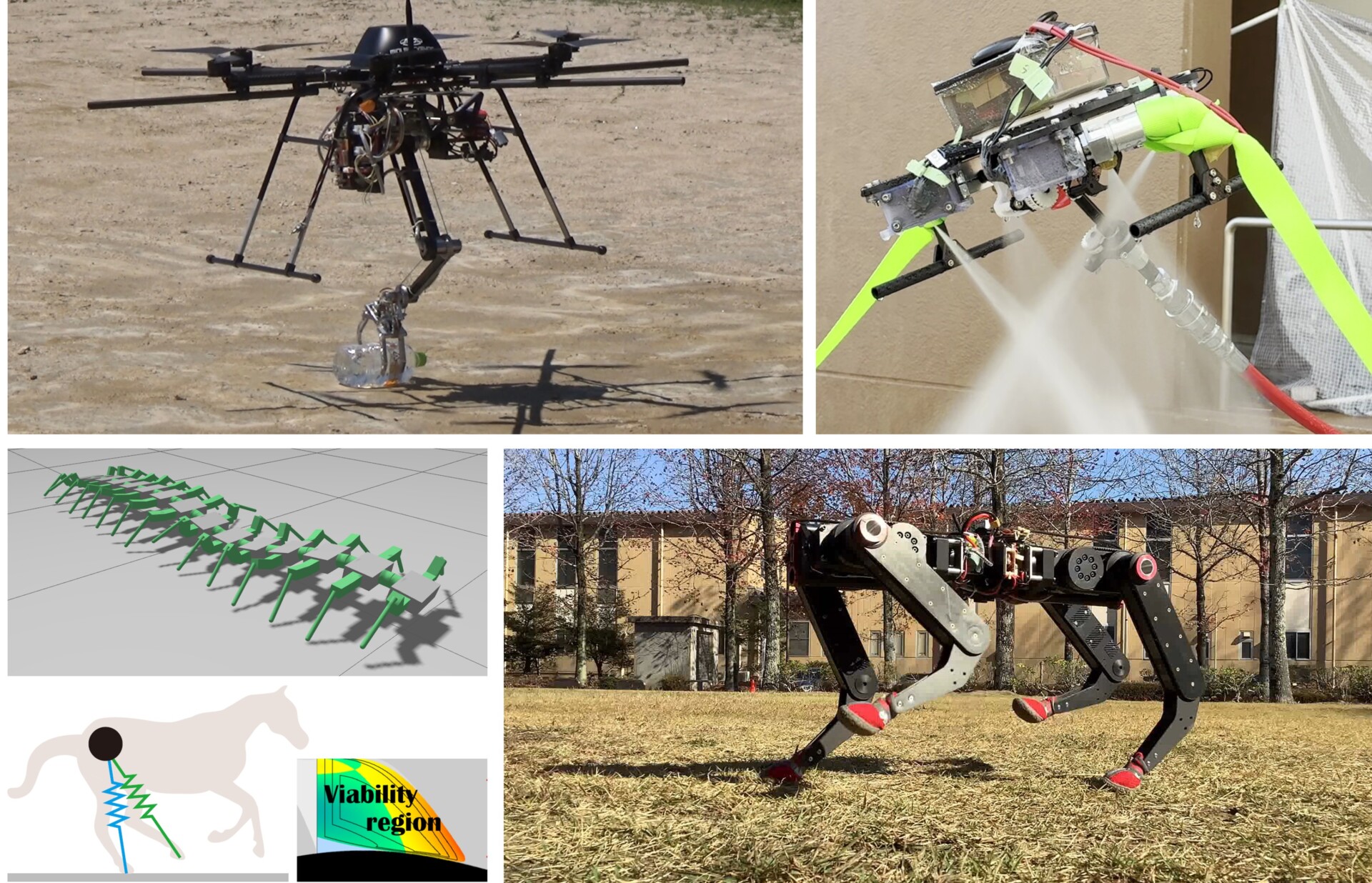
Mechatronics is an interdisciplinary field that combines electrical engineering and mechanical engineering. It also integrates technologies such as control engineering, information engineering, and computer science. By fusing these fields, a wide range of technologies—most notably robots—have been widely applied in areas ranging from everyday life to industrial applications.

Many people believe that the intelligent movements of robots are created by computers. However, the physical structure of the robot itself also plays a crucial role, and many intelligent behaviors arise from the characteristics of the body. In our laboratory, we therefore conduct research on mechatronics that contributes to solving societal challenges, based on robot mechanisms that embody intelligence and bio-inspired control methods. Our work spans a broad range of topics, including legged robots, drones, manipulators, sensing technologies, and power transmission systems (such as those used in robots, automobiles, and rockets).

  • Takeshi Takaki

    ProfessorTakeshi Takaki

  • Yuichi Ambe

    Associate ProfessorYuichi Ambe

Electric Power and Energy System Laboratory

Electric Power and Energy System Laboratory

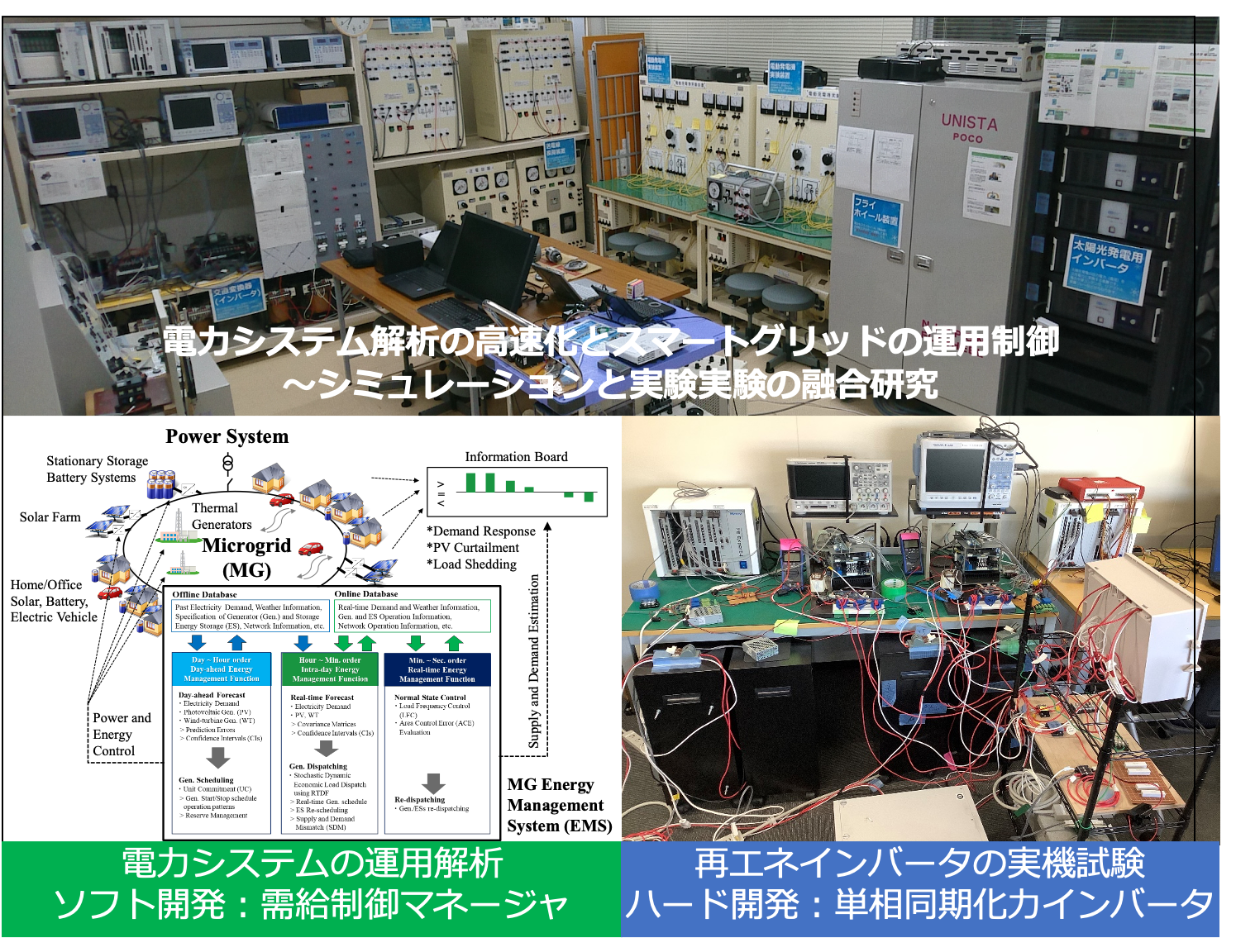
Electric Power and Energy Laboratory has accumulated the methods related to the power system analysis, planning, operation, and control, and now is working on optimizing these methods for next-generation environments by restructuring them as general-purpose analysis tools with additional functions. To solve issues related to the entire system from the software perspective described above, we also focus on hardware such as new inverters. We evaluate and discuss the optimization of the overall system construction from both hardware and software perspectives. We mainly focus on (1) proposal and experimental verification of ”Single-phase Synchronous Inverter (SSI)" developed by the original NIC (Non-interference core dynamics) design method, (2) development of "Supply and Demand Control Manager", (3) development of system analysis tools, (4) development of various control and planning methods.

  • Yoshifumi Zoka

    ProfessorYoshifumi Zoka

  • Yutaka Sasaki

    Associate ProfessorYutaka Sasaki

  • Satoshi Taoka

    Assistant ProfessorSatoshi Taoka

  • Naoto Yorino

    Designated ProfessorNaoto Yorino

  • Ahmed Bedawy

    Designated Associate ProfessorAhmed Bedawy

Human Systems Augmentation Laboratory

Human Systems Augmentation Laboratory

The Human Systems Augmentation Laboratory conducts research on systems that enhance human abilities and potential through the engineering-based understanding of human sensation, movement, and brain function. By integrating virtual reality, robotics, artificial intelligence, neuroscience, and biosignal measurement technologies, the laboratory pursues interdisciplinary research spanning the brain, sensation, and motor functions, including human augmentation technologies utilizing haptic and force feedback, neurofeedback, neuromodulation, biosignal analysis, and kansei (affective) modeling.
For example, the laboratory investigates kansei modeling to quantitatively evaluate subjective sensations from an engineering perspective, as well as technologies utilizing flexible, lightweight, and safe artificial muscles and haptics. The laboratory also studies the estimation of human emotional and physiological states through AI-based analysis of biosignals such as electroencephalograms (EEG), electromyograms (EMG), and respiratory signals. In addition, research is conducted on non-invasive brain function augmentation technologies using neurofeedback, transcranial magnetic stimulation (TMS), and electrical stimulation. Through these studies, the laboratory aims to contribute to applications in education, healthcare, and rehabilitation.
Students in the laboratory can gain broad experience ranging from device development and programming to AI analysis, experimentation, and data analysis. The laboratory is also actively engaged in human resource development through international activities and collaborative research projects with industry and other organizations.

  • Yuichi Kurita

    ProfessorYuichi Kurita

  • Zu Soh

    Associate ProfessorZu Soh

  • Mitsuaki Takemi

    Associate ProfessorMitsuaki Takemi